Unknown's avatar

About Marienna Pope-Weidemann

Writer, storyteller & movement builder who dreams of forest life

Aid Agencies Keeping Feet Dry on Lesvos

I didn’t come to Lesvos as a volunteer. I came as a journalist, to report truthfully what I saw there. But in those crucial, urgent moments – when a few people struggle to feed 2,000 or screaming women hold their infants out to you from a storm-battered boat and there is simply no one else to put out their hands and help, you can’t just stand there and ask for an interview. At least, I couldn’t. So my five days on the island became five weeks. And it was in the act of volunteering whatever support was needed that I found the real story of the refugees: the story of how apathy and mismanagement turned a crisis into a tragedy.

It begins at the beaches. We all know boats are sinking – more than 3,000 lives have been lost this year in the Mediterranean crossing. Just the other day, a boat with 300 people went down. Apart from limited rescue operations by an overstretched Greek coastguard, what I call ‘the Independents’ – small bands of volunteers from Lesvos and around the world – are often all that stand between the refugees and that ugly, growing number.

On my first day on the beaches I was swimming buoyancy aids out to refugees jumping from waterlogged dinghies. That was the day I first used CPR and later, watched as the government registration rules kept a mother from holding her dying child. All this as representatives of a major aid agency stood with dry shoes on the beach taking photos with their phones. The rule, to which I am sure there are exceptions, seems to be that after a day on the beach you can tell the aid workers from the volunteers on the basis of who has wet feet.
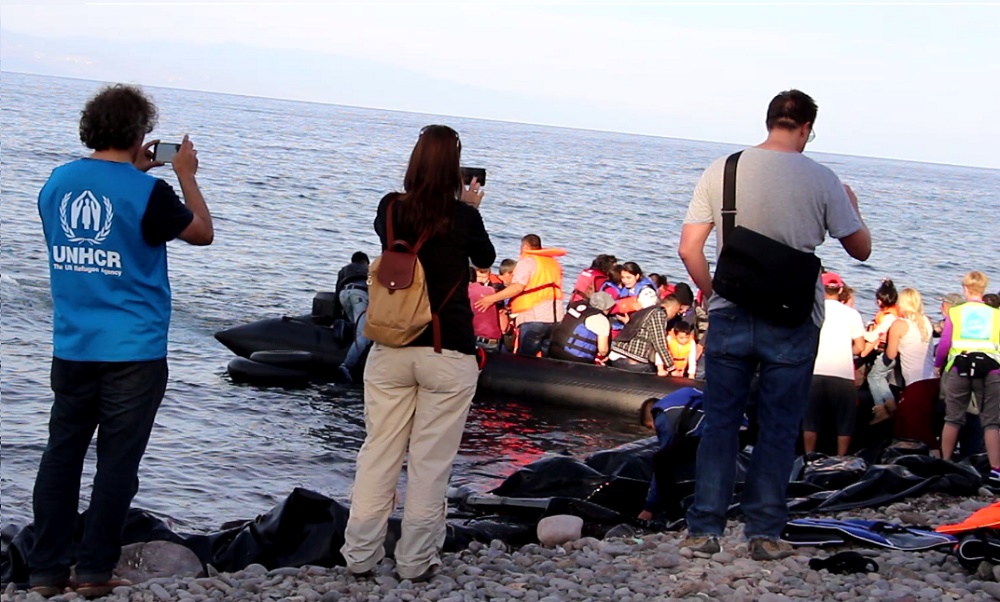
FeetDry

At the island’s makeshift refugee camps, everyone has wet feet. Trench foot and flu were rampant during last week’s storms, and in the absence of adequate shelter construction or even tarpaulin provision, we volunteers handing out bin liners created a frenzy. For weeks, police had been using violence and teargas almost daily. Food shortages have been constant and the near-total absence of translators aggravates regular episodes of panic and violence during the agonising and ineffectual registration system.

Nights are the worst. Once the aid agencies ‘clock off’, there is no one to help the lost child, the bleeding mother-to-be, the ailing grandfather. And in the face of every kind of deprivation you could name, comes a chorus from every corner: “It’s not our jurisdiction.” So the volunteers make it theirs, and even when the world is watching, this is the reality it never sees.

The aid system in Lesvos can and must be reformed. For me, there are three vital elements missing: honesty, humility and humanity.

Honesty

The crisis sweeping Europe is not going away any time soon. Refugee numbers Police Kick at Moria (taken by refugee)are on the rise and winter is on the way. Without radical reform, thousands of men, women and children are going to die needlessly on European soil.

Neither frontline governments nor NGOs can possibly prepare for this unless they are prepared to tell this simple truth.

Perhaps if this were not a debt-ridden nation in the midst of its own crisis, there would be a “gigantic humanitarian effort” under way in Greece, but for the record, there is not. And Camp Moria has not been a place where children get PlayStations and have their faces painted. The racist violence, corruption, police impunity and legal failures criticised in the past are very much still part of the picture. As worrying as this is, the fact is: only the Independents seem willing to speak about them.

Humility

What frustrates the Independents more than anything is the apparent territorialism of the big aid agencies. In one particularly revealing incident, a woman whose infant had drowned on the crossing was literally fought over on the beach by employees of rival charities keen to represent her case and the media attention it would garner. Bartering in this kind of ‘poverty porn’ alienates the refugee community from those who are meant to be supporting them.

Many Independents come with vital skills: lifeguards from Denmark, coastguards from Spain, paramedics from Norway. The list goes on. But often, it’s the basic contributions that are most needed: small-scale fundraising, cooking and cleaning, building shelters and perhaps the most precious commodity of all: time. “You guys are the only ones that make us feel heard,” one refugee told me. Independents also enjoy a degree of freedom that allows them to respond more efficiently to rapidly changing circumstances and endless red tape. We’re prepared to drive hypothermic children to shelter without waiting for police permission, for example. And we are present at all hours in places formal agencies have abandoned.

Most Independents understand that those working for formal organisations, while empowered in some ways, are restricted in others. But when overstretched, the only answer is to collaborate with Independents as autonomous, equal partners in the provision of a lifesaving service; to share resources where possible and maintain a dialogue always.

The same goes for refugees themselves. Many have urgently needed skills – from construction to translation. A formalised and mutually beneficial system to utilise these skills could transform the camps.

Lack of coordination and support leaves untrained Independents working night and day, not getting what they need, while aid agencies seem to have storehouses full of resources and lack the personnel to distribute them. If only an efficient, dynamic relationship could be built between these two sides, we might start to see some of the infrastructure needed to cope with what is surely still to come.

Humanity

Last week, when I needed to get papers fast-tracked for a bereaved mother whose infant was hospitalised and on the brink of death, I asked a UNHCR (UN refugee agency) staff member what could be done for her. He just stared at me. “Please, can you take her name at least? We can have someone look for her tomorrow, make sure she gets where she needs to go,” I implored. He shook his head: “Registration is the police’s responsibility.” I asked him exactly what his responsibility was. He ignored me.
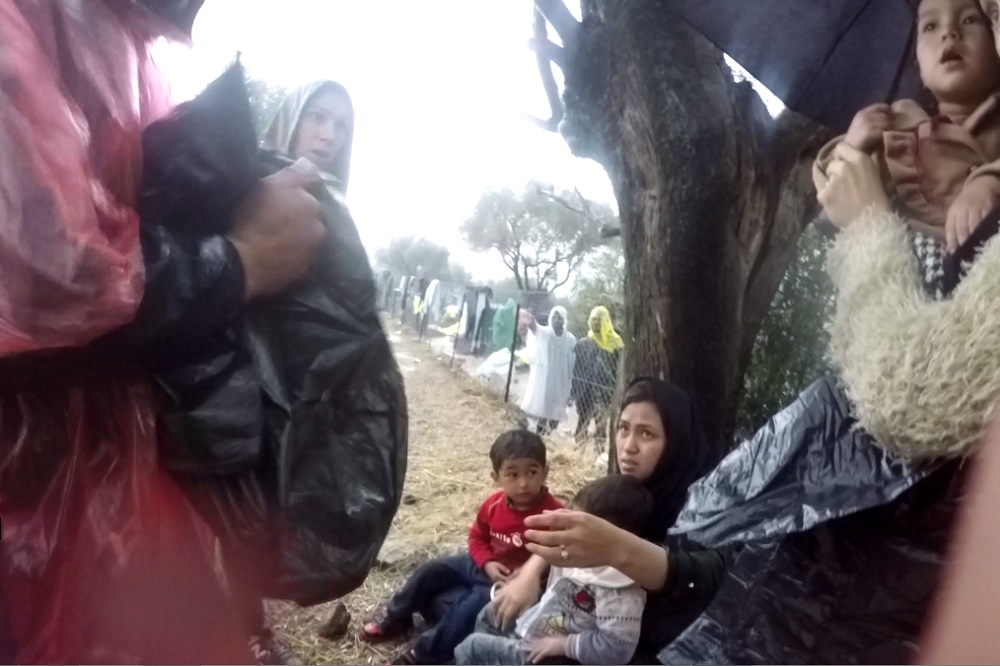
Independent volunteers distributing bin bags at Moria

Independent volunteers distributing bin bags at Moria

I got my degree in Politics and International Development from SOAS, University of London. When I started, I was aspiring to work for UNHCR myself. What I learned at university made me more critical of the structures in which they operate, but after my experience in Lesvos I really don’t think I ever could. Time and again I’ve been shocked by the apathy and detachment displayed by the professional aid workers. There’s also the question of how Syrians are treated so much better than anyone else, something the aid system doesn’t seem to be contesting nearly enough.

In a crisis situation when most suffer without even the basics, some will always try to cheat the system. It’s not like there would be a level playing field even if they didn’t – the survival game is rigged and competition is brutal. But that doesn’t give anyone, from a position of power and privilege, the right to make generalised assumptions that every starving, dehydrated woman that faints in the queue is faking it or just “hysterical” (a favourite camp term). Once you start making generalised assumptions like that, dehumanising the ones you’re meant to help, you’re no longer qualified to be of help.

***

On the ferry to Athens recently, I hid two Afghan mothers with infants in my cabin so they’d have somewhere to sleep out of the oceanic wind, and spent my evening on deck with some of my new-found Syrian friends. As we talked the night away, we found ourselves cracking jokes about all this, doing impressions, demanding “PAPERS!” from each other whenever someone needed the toilet.

But like me, I think they laugh to keep from crying. Their endurance, their dignity, their courage to carry on, is the most beautiful thing I’ve ever seen. They’re not victims, they’re survivors. And if my critique of the aid system here seems idealistic, it is only because I hold it to the standards they deserve. The people I have met and the stories they have told me are all the evidence we need: we can do better than this.
Originally written for IRIN Global

Odyssey Entry III: Crete & the Myth of the Economic Migrant

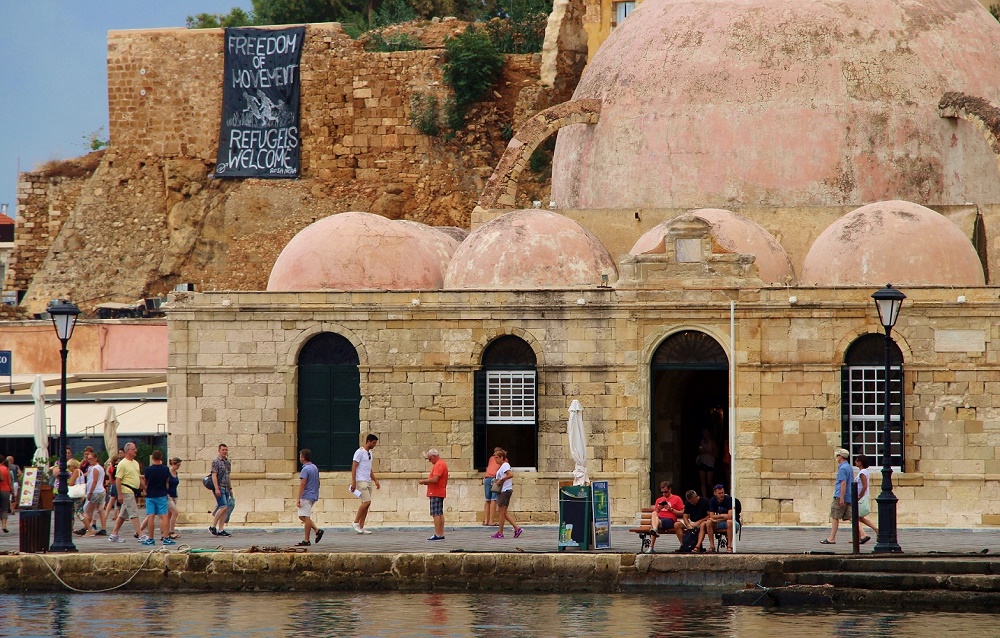
Crete is a remarkable island of outstanding natural beauty and vibrant traditional culture. I arrived there at the end of the tourist season, as the tavernas and hotels were preparing for hibernation. In Chania, a beautiful coastal town drenched in romantic colonial charm, a great black banner reading “Refugees Welcome” hung from the old Venetian castle overlooking the harbour. But none could be seen amidst the tapestry of designer shops and coffee bars. Still, their ghosts seemed to fill the streets and a sense of foreboding quickly entered most conversations on the topic.

IMG_1279b

When I told people my next stop was the island of Lesvos, eyebrows typically rose above hairlines. Many business owners said they feared tourists getting the “wrong impression” about Greece. When assured that I thought highly of their country and knew what to expect on the island, eyebrows fell off the backs of heads. Then, why would I go? Don’t I know how dangerous it is, “a white woman alone at the camps”?

One hotel manager described the refugees in medieval terms, as “Muslim invaders.” I reminded him that they were not soldiers but civilians, many of them women and children. He was dismissive. “They are single men looking for an easy life. They should stay and fight for their country, like we did,” he replied, referring to the Greek civil war of 1946-49. “They have no respect for our culture,” one hotel owner complained, repeating the now widespread myth about refugees defecating in Greek churches (which turned out to be a lie cooked up by supporters of the fascist Golden Dawn party on Twitter).

Since the financial crash, many progressives have looked with envy at the spirit of resistance that has fueled Greece’s mass strikes and civil disobedience and swept Syriza into power. But those days may be coming to an end. The day I arrived in Crete there was (another) general election; Tsipras was running for a renewed mandate after bowing to the austerity memorandum that a clear majority of Greeks had bravely voted against in his referendum.

I was sitting with the staff at an empty tavern watching the results come in on TV. They were all socialists and Syriza supporters, but none had bothered to vote, considering the outcome both a foregone and ultimately meaningless conclusion. “He betrayed us after the referendum,” growled the elderly chef, stubbing his cigarette out for emphasis. “We vote and we vote and nothing changes.”

It brought to mind Emma GoIMG_1401ldman’s famous adage that if voting changed anything, it would be illegal. Tsipras held onto power, but voter turnout plummeted to 56.65%, the lowest ever recorded in Greece since the restoration of democracy in 1974, and Golden Dawn received 100,000 votes. In the islands of Kos and Lesvos, which have been overwhelmed by refugee numbers, support for the neo-Nazi party has doubled.

Many progressive Greeks are suffering a crisis of faith. Tsipras’ pyrrhic victory has cost him the confidence of a disillusioned country. Basilis, a tall, eloquent man in his early forties who would seem more at home lecturing at a university than working at a taverna, told me that, though passionate, he felt too old and too tired to continue the political struggle. Instead, he would go back to his family farm for the harvest.

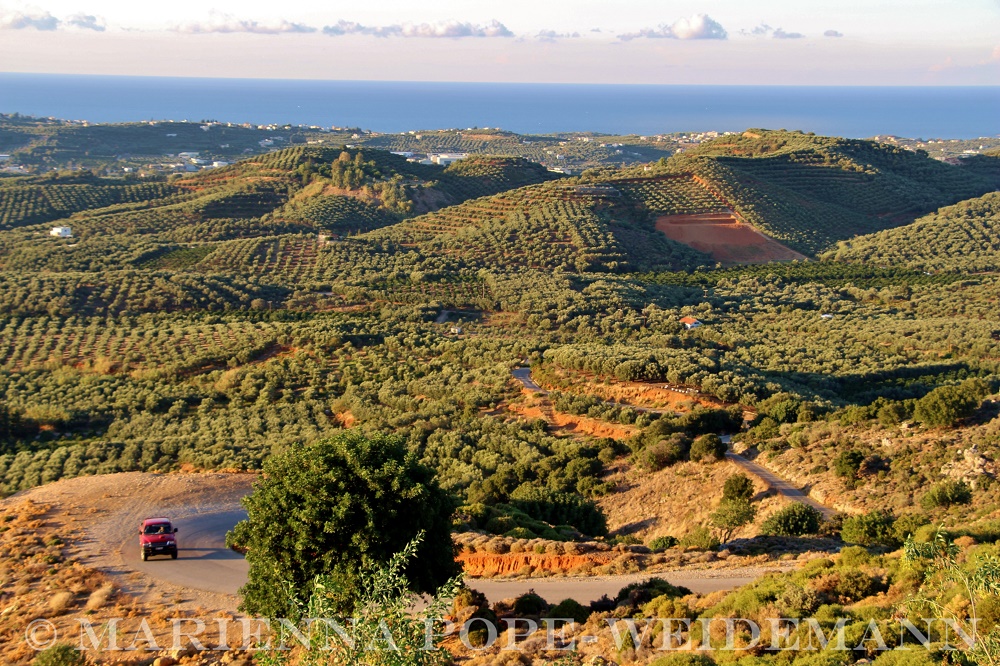
The island’s iconic rolling orchards of olives and oranges are part of the fabric of life here. December’s olive harvest is an annual event of immense cultural (if not economic) significance to Crete, where small-scale organic agriculture is still an intrinsic part of community life. Young and old, rich and poor, in the orchards or just in the garden, most Cretans still maintain a close connection to the land. And they work without pesticides, using Indigenous methods like limewash to protect their crops. When I told Basilis how much we pay for organic tomatoes in the UK, I had to Google it before he’d believe me.

This culture—and the reduced stress levels, high life-expectancy, and sumptuous food that come with it—is a big draw for tourists, oblivious to the fact their banks and governments at home are threatening it with extinction. During a visit to Crete’s blue lagoon, one local had explained to me that areas of outstanding natural beauty in Greece are marked as “zones protected from the EU.” But the vast bulk of GreIMG_2241ece’s agricultural land has no such defence. Under the terms of the austerity memorandum signed by Tsipras, taxes on Greek farms will double, forcing many organic family farms out of business. In this economic climate, only big agribusiness can thrive by compromising the environment, food quality, and wages.

“The banks are pressuring families to sell off land to pay their debts,” Basilis told me. “I keep telling people, don’t you see, you’ll sell a bit, your children will sell a bit, and your grandchildren will have no land. Monsanto will come in with its pesticides and chemicals and rape the land. To have no money is bad but at least with land we can still feed ourselves properly. But not for long.”

What I witnessed in Crete—the growing xenophobia and corporate enclosure of the farmlands, the social breakdown and erosion of hope—seemed particularly poignant given the island’s venerable history. Four thousand years ago, it was from this island that the ancient Minoans built an astonishingly advanced civilization, with its pioneering literature, theatre, and seafaring, and established a society marked by remarkable sexual and social equality. Where property was held in common, today selling off land and services to private interests is, for many, the only way to survive.

Many Greeks have opened their hearts and homes to the refugees. But for others, the economic crisis makes exclusion not only justifiable, but essential. “We must stop building camps to encourage them, they need to go,” one small business owner told me in Crete. “We have no resources to care for our own people.” With war veterans eating out of rubbish bins in Athens and the suicide rate soaring, that much is true. In a way, it’s also ironic. As youth unemployment hovers around 50 per cent, Greece is already producing its own “economic migrants”: educated young men and women whose talents the Greek economy can’t use, and who now dream of doing meaningful work for a decent wage abroad.

IMG_2419

Originally written for The Leap

Entry IV: The Sinking of the Nameless: Recollections of a Volunteer/Journalist

Great tragedies have names. The Titanic, the Lusitania, Pearl Harbour. Their heroes grow taller now than when they walked on earth and their dead live forever in story.

This is not a great tragedy. This is just a boat of migrants that went down in the Aegean, another number, another regrettable spat of collateral damage in the border war of Fortress Europe.

Lesvos, 2015

Content warning: distressing scenes, death of a child by drowning.

Son

I acclimate to the volunteer life on Lesvos. I acclimate to the segregation in the camps, packed tents of Syrians looking like dignity compared to the Iraqi, Afghan and miscellaneous African people left sleeping in dirt. I acclimate to screaming babies being thrown at me from dinghies and the brutality of the Greek police. I acclimate to aid workers eating in good restaurants while the children they’re here to help eat from the dustbins outside. I acclimate to the numbness that spreads right out to your fingers and toes to keep you from breaking. My friend Ashley convinces me it’s time for a day off. We don’t work by shifts for a charity, we just do what needs doing and that shift is endless. We plan to drive from Anaxos to Molyvos for a dinner that isn’t rice and beans or eaten standing up. It’s a half hour drive down the coastline but you’d have to be a sociopath to make it in that time today. The sky is bright but the sea is furious and the wind bites. Even so, boats approach the island endlessly. Every few hundred metres along the beach is another dinghy coming in without anyone to meet it, another boat wrecked at terrifying angles on the sand with broken windows and emergency blankets fluttering from the rails like trapped angels. We stop and stop and stop again. Freezing children bundled into cars, battles for seats on the rescue bus, phantom ambulances chased for the sick and injured. Breakfast and lunch come and go and we’ve given all our food away, so by the time we reach Molyvos, we’re starving. We talk quietly as we each wrestle our own guilt. After weeks not really using it, our privilege of being able to step out of this cataclysm feels grotesque. The simple act of sitting down to bread and wine has become bizarre. My eyes sweep the harbour, painted late afternoon pink. The restaurants are all open, all empty. Waiters recline in patron’s chairs, smoking and chatting. Inland, hazy indigo peaks reach into the sky. It strikes me as vaguely odd  that I can’t unclench my teeth. We’re a few bites into our bread when the sirens start. Rescue workers hurl themselves out of doorways from nowhere. With a synchronicity that only comes to a place where disaster has become routine, tables and chairs are swept away in one smooth motion. Volunteers, locals, journalists and medical teams are converging on the waterfront.  Ten or fifteen children come off that first rescue boat, which heads immediately back to sea. I put my arms out to receive a young boy. He can’t be more than nine years old. He is unconscious. I run for the medical team, transfixed by his face. He looks strangely peaceful, only his skin is grey and his lips are blue. I lie him down beside one of the Red Cross doctors. The doctor is already working on a little girl. He doesn’t even look up. “I’m using both my hands already.” His tone is matter of fact, the way an adult might reassure a child with a serious injury that they have everything under control. “Can you do what I tell you?” “Yes.” My voice sounds far away. I get my first crash course in CPR. I am terrified of hurting him, of doing something wrong. Thirty chest compressions. Hold the nose. Two breaths until the chest rises. His lips like ice on mine. Thirty compressions. Nose. Breathe. Thirty compressions. Nose. Breathe, breathe, breathe.  The boy’s eyes fly open and he starts coughing water. I roll him over and rub his little back. Once he’s breathing right we strip off his wet clothes to prevent hypothermia. The medics disappear. I wrap the boy up in my jacket and lift him onto my lap, covering his body with mine. I can see Ashley holding a little girl by her ankles while the medics try to get water from her chest. Every time I see a medic I have them check him. They are overwhelmed. They say he’s okay but he doesn’t look okay to me. I’ve been an atheist all my life. This is when I start praying. I know there is more to do but until someone appears who can take better care of this boy me, I’m not leaving him. I don’t know how long I rock back and forth with him in my arms whispering in a language he doesn’t understand. Now and then he opens his eyes a little but they never focus. I don’t know if he sees me. I choose to believe he can hear my voice, feel warmth, recognise the feeling of being out of the water, being cared for. I’ve never felt love as vast and desperate as I do holding this child in my arms. Together with the horror, it engulfs me. Before I left, a friend of mine warned me that you cannot be a volunteer and a journalist. Journalists do not get involved. I think about that as I hold this boy, who in this moment has only me in the world. Photographers circle like vultures, getting in people’s way, shoving their lenses where any decent human being must surely know they don’t belong. I don’t want to be a journalist anymore.

Daughter

Finally, the ambulances come. The paramedic has to pry my arms straight out from under the boy. I don’t want to let him go. I’ll never know what happens to him. A second siren announces the return of the coastguard. Somehow, my legs carry me over. I put my arms out to an Afghan woman who grips them like she’s still drowning. “My mother, my brother!” she shouts in English. I try not to think of my own mother drowning. “Boats are still coming,” I tell her. She does not respond. “We have to care for you now. If you don’t get dry, you’ll get sick.” At first she won’t let me, so I just blanket her shaking body, speaking softly and waiting with dry clothes until she’s ready to be touched. “Please, please, my mother is a good woman.” A flare of fury that in this moment of all moments, she feels the need to assure me that her mother deserves to be rescued. Her name is Sultana. She is alone now, she keeps saying. I help her change, shaking and crying. Feeding her water feels like the most important thing I have ever done. The priest opens the church to provide shelter, so I help her inside and encourage her into the recovery position as she coughs up the last of the sea water. I take her name and promise I’ll look for her family and come back. She kisses me and kisses me and kisses me. Twenty minutes later when I return with more supplies, she’s gone.

Grandchild

There is one more boat after that and fewer people this time. The coastguard has given up the search. The tavernas have reopened to offer shelter and tea. Elderly local women rock motherless babies. One catches my eye. She cocoons a little girl in a blanket as expertly as if she were her own. Her dark eyes brim with an angry love. I want to reach out to her but she seems far away and I don’t want to be the one to bring her back here. People weep on the floor, staggering from group to group, crying out for their loved ones; women call for their children, men ask after their wives. I work with a multilingual Syrian man to compile a list of names. The mothers are relieved just to have someone asking after their children. They stay calm while they spell each name and give the age of each child with any distinguishing features. Then when the helplessness sets in, they break down. I hold some as they cry. I am useless, wooden. A softly spoken woman called Named Shorooq who I’d helped from the rescue boat has lost her husband and all three children. When the translator has to leave, I hide in an alleyway to cry. Five or six hours in and it’s dark. I haven’t stopped for food or water or breath and I have no idea where Ashley is. A low, alien sound rises up from the back of my throat. There is a unique kind of crying for when you’ve seen a dead child for the first time; a child who, without the right passport, died to make a journey that you could make whenever you like for about ten euros. I sway, wordless. Another volunteer finds me, asking for help with a young mother. She is sitting in a doorway soaking wet, refusing all help until we find her baby. Unblinking, she watches the sea for a boat we know isn’t coming.

Mum

“How do we get her to drink?” asks the young American. “She told us,” I reply. “We find the baby.” I don’t know what the best use of my time is at this point but doing almost anything seems less futile than allowing myself to feel this grief that isn’t mine but which nonetheless threatens to swallow me. Once she recognises me as ‘the person on the phone about the baby’, her eyes start to follow wherever I go. Every time I take a call, there is hope. I start gesturing ‘no news’ as quickly as possible because I can’t bear it. Eventually, a local doctor reports two infants had been rushed from the first rescue boat straight into hospital. It doesn’t look like they are going to make it and we can’t bring the mother to the hospital because the police aren’t letting anyone leave. It is the first moment I become aware that the police are even here because they aren’t running around like the rest of us, just standing in clusters on the edge of chaos. I make a beeline for the nearest officer. I explain that she’s at risk of hypothermia but won’t accept care until she sees her baby. I beg him to help me find a way to get her to the hospital. The officer towers above me in his riot gear – like anyone here has the energy to start a riot. “Like I told the doctor, she was rescued at sea.” He won’t even look at me. “That means she is formally detained until she gets her registration papers. No papers, no hospital.” “It takes days to get papers. Her baby could be gone by then, can’t you just escort her?” “No papers, no hospital, you get it?” he repeats. I am haunted by the notion that the presence of its mother might make the difference between life or death for that baby. At the least, she is being robbed of her chance to say goodbye. The rage is unspeakable.

Dad

Like an alien from another planet, good news: ‘Shorooq family found.’ I grab a translator and head straight to where I’d left Named. She starts crying again, kissing my hands, clinging. I wait with her, as much for my sake as for hers. I need to know I am still living in a world where good things can happen. We hold each other as we wait and I listen to her pray. Every time a van passes, her nose is pressed against the window. From the third van steps her husband. She calls his name, yanking me with her through the door. In his arms, he cradles their youngest child, two year old Razan. I recognise his name from the list we made. There are no other children. Named falls to her knees before her husband, howling. She thumps his legs with one fist, still gripping my hand with the other. This isn’t what we’ve been waiting for. It’s almost worse than nothing, as though in the presence of this little boy all she can see is the absence of the other two. Her husband stands like a statue, holding his son. His eyes brim with shame as he accepts her blows in silence. I tell her there are children in the hospital. It’s possible they are alive. I don’t really believe it and she knows it. Her daughter, Maram, is six. Her other son, Malak, aged three. Eventually, Named takes her baby in her arms like she will never let go. I leave them grieving together and return to give the other mother some answers. Her brother translates as I explain there are two babies at the hospital receiving intensive care. We don’t know if one is hers. We cannot take her to them. I find myself quoting the police. “You are being detained. You cannot leave until you get your papers.” I tell her I am deeply sorry and the words taste loathsome. She looks at me with an expression of absolute incomprehension. I have a human right to seek asylum from war. The whole world knows what is happening in Syria. I am not a criminal, so why am I a prisoner? Even a criminal deserves to hold their baby before they die. Her brother’s heartfelt thanks make me feel even worse. At the very least, I resolve to try and get her into the Syrians-only camp where she can be fast-tracked for her registration papers. The only place to go for that is the man with the clipboard and a cap that informs the world he works for the UN High Commission for Refugees. I argued with him earlier about getting access to the hospital and he doesn’t look pleased to see me again. Bitterly, I concede there is nothing to be done for her tonight but please could we just talk about what will happen tomorrow. “Registration is the police’s responsibility.” I ask him exactly what his responsibility is. He ignores me. “You know the police won’t do anything,” I argue. “Please, can we just try to figure out how to do our best for her?” He walks away. I wonder if at some point, just to keep doing his job, he’s had to reach deep inside himself and smother something essential. Eventually, I find someone else to have the woman and her brother collected in the morning and fast-tracked together, so she doesn’t have to go to the hospital alone to identify her baby’s body. Their gratitude is jarring.

Orphan

Ashley finds me smoking with my legs dangling over the water, staring down at the debris. Emergency blankets gleam like buried treasure from beneath the bobbing water bottles and a cluster of empty life jackets that cling to each other. “You ok?” I ask, absurdly. She sits down heavily next to me. My voice still sounds far away. “I don’t think I can take much more of this.” Her voice breaks. “It’s time to go home soon or we’re really going to fuck ourselves up.” “We’re already fucked up.” I drop my cigarette butt into the Aegean because nothing seems beautiful or salvageable at this point. “We were fucked up before we came, we just didn’t know how badly.” Ashley is silent. In a waterfront café, I get a few people fed while Ashley uses her phone to help them contact home. Across the table, a Norwegian volunteer comforts a teenage girl named Sara whose entire family is presumed drowned. When the survivors start talking and we learn that three hundred people had been packed onto a rotten little two-storey tour boat, the kind that started appearing on the beaches after last week’s storm. It’s the families with babies, disabled and elderly relatives who pay extra for the wooden boats because they’re meant to be safer. The boat’s top floor crashed onto the bottom and it sank in less than a minute, leaving a pool of orange life preservers shining in a great expanse of blue. From the ceiling, a television screen shines down a basketball game, adverts for cosmetics and gambling apps and cleaning products that kill 99.9 percent of bacteria. The local news comes on and we blankly watch images of ourselves from the hours before. Ashley is in no condition to drive so we stay in an empty hotel nearby. We talk a little, just to hear each other’s voices. Once she’s sleeping, I go up to the roof to watch the sunrise with my back to the sea.

The next day, I scan the media coverage for names I recognise, but there are no names. That’s why the makeshift headstones in Greece’s mass graves just have numbers on them. When we go back to the harbour, it is calm. The debris is gone and the tavernas are serving again. A new batch of fresh faced volunteers dish out rice and beans from the back of a van. We meet one of the doctors we’d worked with the night before, a stoic south Londoner called Zakia. I ask about the children and she tells me that after so long in the water, they never really had much of a chance. “Island hospitals just aren’t equipped to deal with this kind of catastrophe,” she explains. “When they’ve taken in that much water, even if you can get the heart beating, often the best thing you can do is just hold them.” I did that, I think. It means something but not enough. On the road that snakes from the harbour up past the olive groves, a procession of newly-arrived refugees is setting out on the twenty-four mile walk to the camps.

Odyssey Entry II: Lesvos’ Hidden Humanitarian Disaster

12th October 2015 – Police beatings, tear gas, hunger and chaos. It sounds more like the repression of the Arab Spring than UN staffed registration centre for refugees. But at Camp Moria on the Greek island of Lesvos, this is the shameful reality.

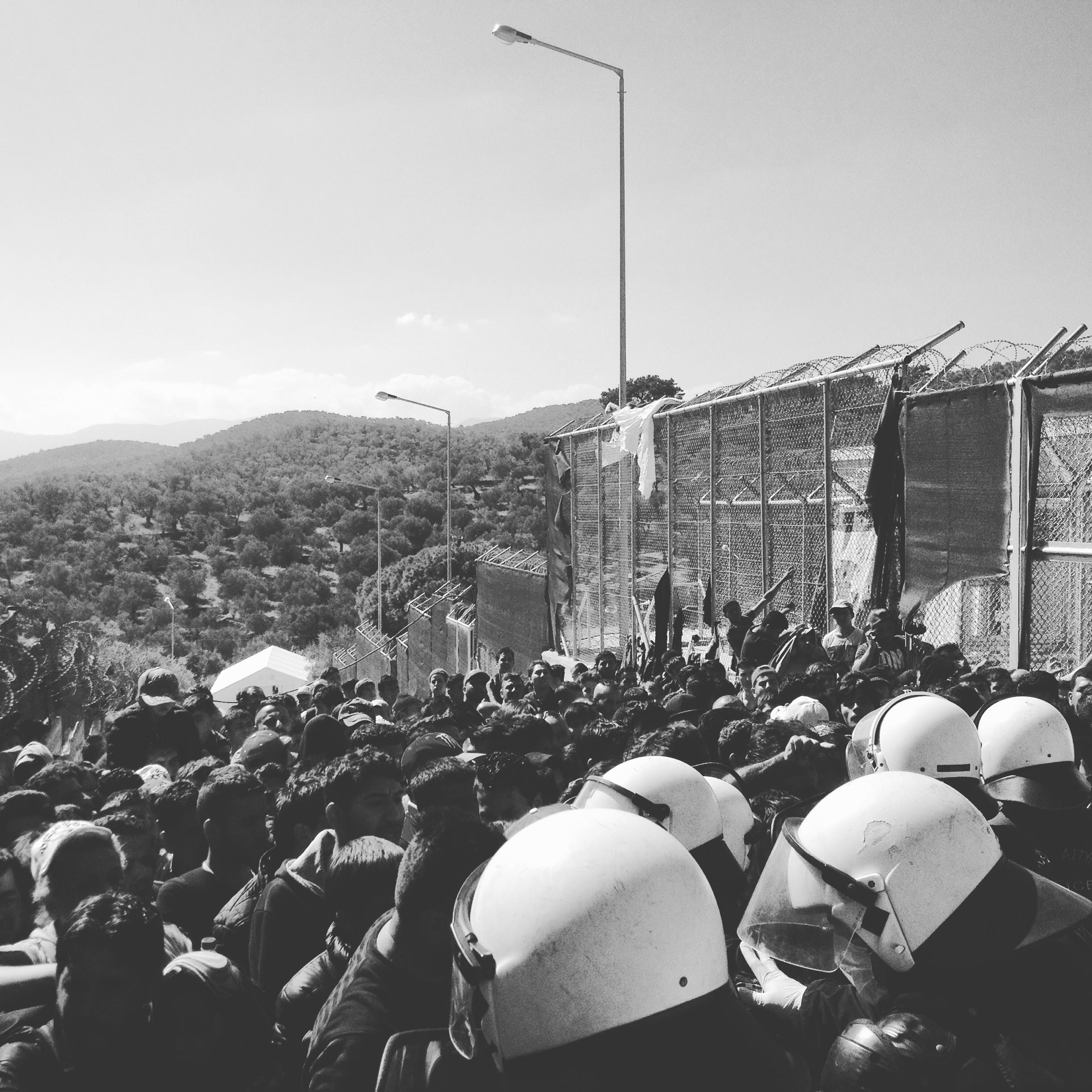
Registration Queue Clash at Moria  Copywright: Ruby Brookman Prins

Riot police clash with refugees at Moria

Lesvos has long been on the front line of Europe’s refugee crisis, with almost 200,000 arriving this year. The vast majority are fleeing government persecution and ISIS forces in Syria, Afghanistan and Iraq. They come to Lesvos from Turkey on what they call ‘the death boats’, the lack of legal channels having created an unregulated market for people smuggling, with drowning common due to overcrowding. The lucky ones are met on the beach by local and international volunteers; the rest by paramilitary coastguards and riot police.

Arriving on the island, I worked with volunteers from the PIKPA camp – the only truly humanitarian camp I’ve seen, run entirely by volunteers and donations – distributing food at Camp Karatepe. One staff member from the UN High Commission for Refugees (UNHCR) told me he had only 13 colleagues on the entire island. Syrian families huddled in scarce spots of shade and squalid conditions. Yet it did nothing to prepare me for what I saw at Camp Moria that night.

‘The Hell Hole’

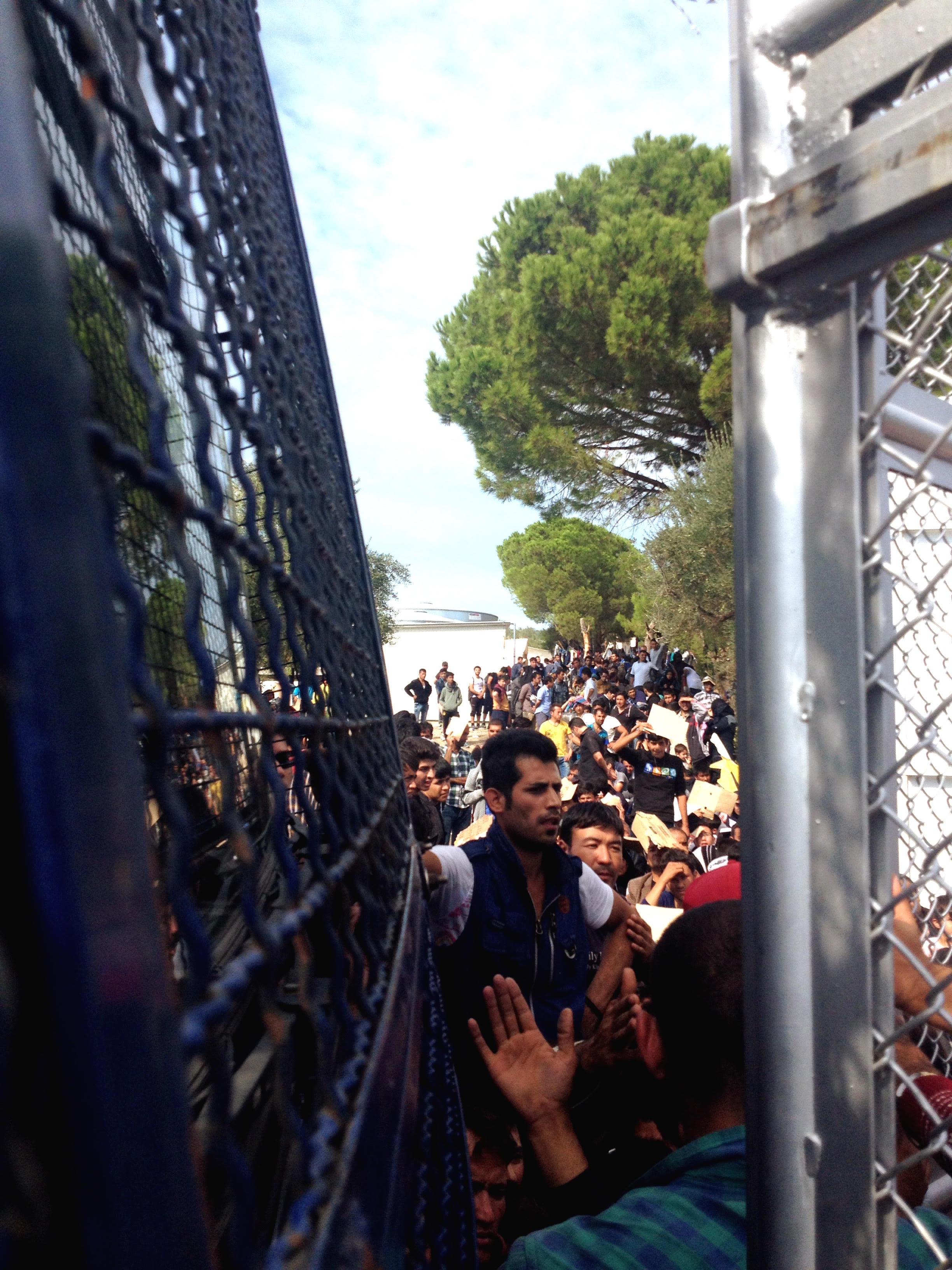
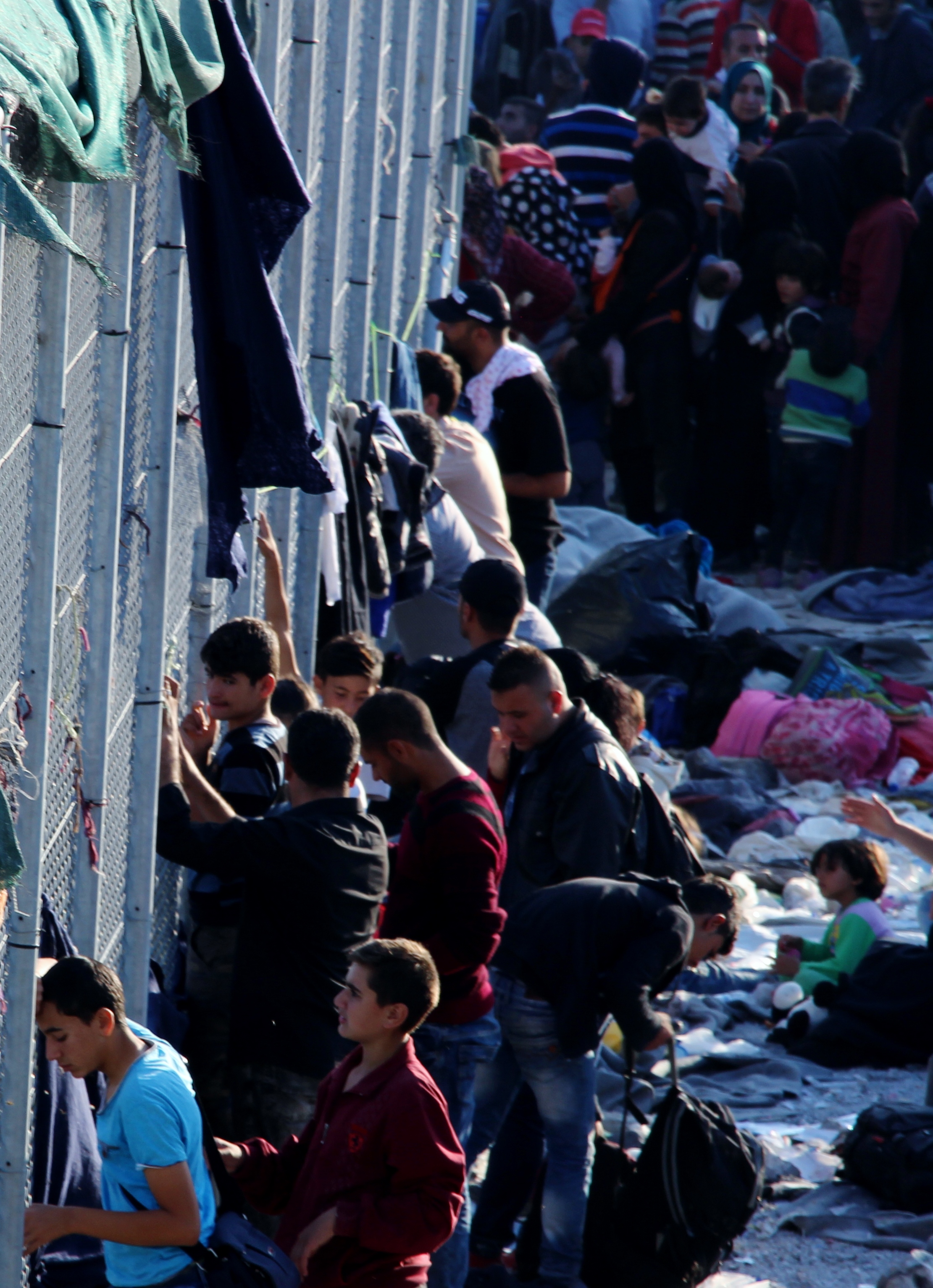
MoriaFenceClash

Registration queue crush at Moria

Moria, described to me as a ‘hell hole for non-Syrians’, is Lesvos’ main camp and where all migrants and refugees must register. The police prohibit journalists from visiting without an escort, and speaking to the refugees or photographing the facilities is forbidden. When I arrived, aid workers were outnumbered by riot police. At night there were none at all, leaving a handful of young international volunteers to fill the gulf left by the international agencies. They had no medical staff and only what basic food and pharmaceutical supplies they could scrape together themselves.

Many people sleep exposed to the cold at night, without tents, sleeping bags or warm clothing. Volunteers save their blankets for children and those who arrive soaked in sea water. The ‘toilets’ consist of a few portapotties and concrete rooms floored with swamps of human waste. Between two locked and fenced off ‘reception centres’ bristling with razor wire, a steep slope leads to the registration office where everyone must register to proceed to Athens or anywhere else. When I arrived there were hundreds queuing through blistering heat and cold of night while riot police loomed over the line. Women and children, sick and injured, are all subject to the same degrading conditions.

One volunteer, who complained to UN staff that surplus food at Karatepe should be feeding Moria’s hungry, was told that it was too dangerous and to ‘leave Moria to the police.’ The consequences of this policy have been dire and instructive. These people are traumatised, hungry, thirsty, exhausted. Waves of panic and frustration are commonplace. Refugees and volunteers widely report that the police, lacking any proper training, often respond with violence. Families commonly queue for days and each time the line is disrupted they must begin the ordeal from the beginning.

Two young volunteers from the UK, Annie Risner and Ruby Prins, recalled how tensions escalated in the early hours of Tuesday last week: ‘A diabetic man had collapsed for want of insulin. An Afghan woman recovering from heart surgery collapsed unconscious in the queue. The police wouldn’t help. We called an ambulance, then the violence started. Police were beating men and women alike. When they throw the teargas people really start to panic because there are families in the line. Kids get crushed, joints get dislocated and bones get broken in the stampede.’ The Hellenic police declined to comment. UNHCR writes: ‘Any difficulties that may arise in relation to crowd management due to high numbers of new arrivals [do] not constitute an excuse for the use of violence or any kind’.

Police Kick at Moria (taken by refugee)

Taken by a refugee at Moria

A New Moria

The following day brought something new to this island: the Greek Prime Minister, Alexis Tsipras and Austrian chancellor, Werner Feymann. Their visit lasted a grand total of three hours. Much more time was spent sweeping refugees under the carpet prior to their arrival. According to local media, over 45,000 were removed from Lesvos in the past fortnight. Journalist Sofia Christoforidou reported extra ships being brought in to take refugees off the island and block new boats from coming in.

Volunteers and refugees feared that seeing the full extent of the crisis might prompt Tsipras to shut the border and trap countless numbers in Turkey, where conditions and police brutality are even worse than in Moria. Still, the volunteers I spoke to all wanted to get the truth out, not cover it up. At Moria however, the authorities opted for a more unorthodox approach: they hid the real Moria and built a fake one.

One volunteer sent this statement, on condition of anonymity: ‘The authorities set up a fake camp, did a bit of gardening and brought in a few Syrian families… Volunteers do what they can but the UN has been totally absent, MSF [Medicines Sans Frontiers] working only a few hours, a few tents but most sleeping in the dirt. There has been regular tear gassing and assaults by police. Shame on the Greek government, the UN and the organisations that allowed this to happen.

Many others repeated the same bizarre story: buses brought in to obscure the main camp and on the outside, the filth hidden under fresh concrete, and food and chairs put out. Meanwhile, the sick and injured from the previous night went unattended. UNHCR consultant Ron Remond told me this was in the interests of the Prime Minister’s safety. His visit lasted twenty minutes: time for a selfie with newly materialised UN staff and one quick peak behind the bus. Then he was gone and that night Moria descended once more into chaos.

Annie and Ruby reported rioting, refugees forming human shields to protect the vulnerable and threatening a walk out. ‘We were being treated like animals,’ explained 19-year-old Ali from Afghanistan. ‘We’ve had no shelter, no food, no answers, just beatings. We said we would walk out of the camp, a thousand of us, all together.’

But when I visited the camp again on Saturday, it was unrecognisable. A new fast track system had been able to register thousands in 24 hours. UNHCR was bringing in more people, the camp had been cleared of rubbish, bottled water had gone out and kids played together in the Save the Children camp.

By the next day, however, things were going back to normal: fast-track registration was terminated, people queued all day without moving and were told the ID numbers they’d queued for all the previous day were null and void. However, following my report for Al Jazeera, the Hellenic Police issued a statement saying they had ordered an ‘urgent investigation’ into brutality at Moria. All this shows what can happen when the world is watching. But Old Moria is what happens the moment we turn away.

Turning the Tide

Following his visit to the capital of Lesvos, Mytilini, Tsipras called again on Europe to help resolve the humanitarian disaster Greece has neither the financial resources nor the moral obligation to face alone. But his calls for ‘greater collaboration with Turkey’ caused alarm. They foreshadowed this week’s negotiations between Turkey and the EU, which proposes to pay President Edrogan $1billion to expand the Turkish camps and shut the Greek-Turkish border in collaboration with Europe’s corporate border guard, Frontex.

Moria Family Seperation

Families by separated detention fences at Moria © Marienna Pope-Weidemann

The inconvenient truth for EU leaders is that refugees say they are not safe in Turkey. Sana, a 29 year old Kurdish teacher, told me the Turkish camps ‘were very bad. They beat us and insult us, they say if we did not deserve exile then we would not be here. They won’t even give milk to the babies. They hate us.’ Others report being robbed, tortured, and even witnessing Turkish soldiers aiding ISIS. Many also fear that Edrogan might quietly push thousands back into Syria and Iraq, trapped with ISIS behind them and the steel walls of Europe in front.

The EU has long been allocating billions for border control, with precious little left to fund lifesaving humanitarian work in disaster zones like Lesvos. As security tightens, refugees move on to find another way, leaving aid agencies scrambling to keep up. I asked one Kurdish father if harsher security measures would dissuade him. ’41 members of my family are dead. My daughters, 10 and 12, were kidnapped and killed themselves rather than be sold as slaves,’ he said with tears in his eyes. ‘I have to get my wife and son out, do you understand? What do I have to fear from fences?’

For now, refugees are still arriving in Lesvos in their thousands. On Thursday night 56 people were saved from drowning and one toddler lost his life. The very next night the lack of safe, legal channels for the crossing cost another life: a baby hidden in a bag and mistaken for baggage, tossed overboard to stop another ‘death boat’ sinking.

UNHCR’s Ron Redmond highlights the need to legalise passage and calls for EU funds earmarked for humanitarian work. But he also said that European states have every right to control their own borders and in truth, there is a growing contradiction there. With the spread of such incredible violence throughout the region, the EU will have to make a choice: to open the gate, or let countless numbers of people die on the other side.

Registration Slope Moria

Syrian families leaving Moria now hoping for sanctuary in EU © Marienna Pope-Weidemann

Originally reported by Al Jazeera

Full story run by Red Pepper Online

Odyssey Entry I: There Is No Migrant Crisis

The vast majority of the men, women and children crossing into Europe from the south refugees from war and persecution in Syria, Afghanistan, Iraq and Somalia. But there are no migrants anymore. Not in this crisis. The three furies of conflict, climate change and chronic poverty have wrought instability throughout the global South. It’s usually some combination of these factors that drive people to risk their freedom and their lives in illegal border crossings. They take that risk for the same reason any of us would: they have nothing left to lose; their freedom is already lost, their lives already in danger. And that is precisely what makes a refugee.Entry1aEvrosArestees

The 1951 Refugee Convention defines a refugee as someone with well-founded fear of persecution in their home country “for reasons of race, religion, nationality, membership of a particular social group or political opinion.” Those in power tend to interpret this in the narrowest possible terms, curtailing the numbers owed meaningful protection for their human rights. But the moment we recognise the poor as ‘a particular social group’, an entire spectrum of structural persecution reveals itself. Well beyond the most obvious forms of persecution – the torture, murder and violence sweeping its way across the Middle East and parts of Africa and Latin America – we find a broad and systemic denial of the right to food, water and shelter; the right to work and fair wage; to healthcare, education and social security, all of which are enshrined in the Universal Declaration of Human Rights.

Such persecution reveals itself not only in the home countries but also in the ‘developed nations’ where these people hope to re-build their lives. The UK is an excellent example of this, where basic welfare and even civil rights are increasingly conditional when applied to asylum seekers and – to put it as bluntly as political correctness allows – ‘low income earners from non-Caucasian backgrounds.’

As lawyer Frances Webber writes in her ground-breaking book, Borderline Justice, one way or another most ‘illegal migrants’ are in truth “refugees from globalisation, from a poor world getting poorer as it is shaped to serve the interests, appetites and whims of the rich world, a world where our astonishing standard of living, our freedoms, the absurd array of consumer novelties, fashions and foods available to us, and thrown away by us, are bought at the cost of the health, freedoms and lives of others.”

It’s a reflection of the depths and endurance of racial prejudice in Europe today that term ‘economic migrant’ is being bandied about at all in the midst of the greatest refugee crisis since World War Two. This is not to mention the array of brazenly derogatory language, from ‘welfare tourist’ to near-genocidal cockroach comparisons and ominous references to ‘swarms’ at our borders. This rhetoric reflects a deeply rooted culture of disbelief: from a position of extraordinary privilege, it makes deplorable assumptions about the character of human beings based on nothing more than their class, their birthplace and yes, the colour of their skin.

To understand this crisis – its causes and consequences – we need to look at the big picture.

‘The War on Terror’

Abu_Ghraib_17a

Abuse at Abu Ghraib: prisoner had electric wires attached to his hands and genitals, and was told he would be electrocuted if he fell off the box

For almost fifteen years now we have watched our governments fight their War on Terror with incredible military and social violence. The rise of ISIS and the steady disintegration of stability in the Middle East is testament to their failure, or their success depending on how cynically you want to look at it.

Now, with what they disparagingly call ‘the migrant crisis’ (as though the problem is this mass exodus of civilians rather than the war itself,) there can be no more pretending they are just after this or that dictator, like drug addicts promising each fix will be the last. “But you must understand, this next guy’s really bad, if we can just take him out, we’ll have peace.” That sort of rhetoric is laid bare now it’s the persecuted and pro-democracy dissidents being imprisoned, beaten and gassed on European soil. This is total war not on terror, but on the poor.

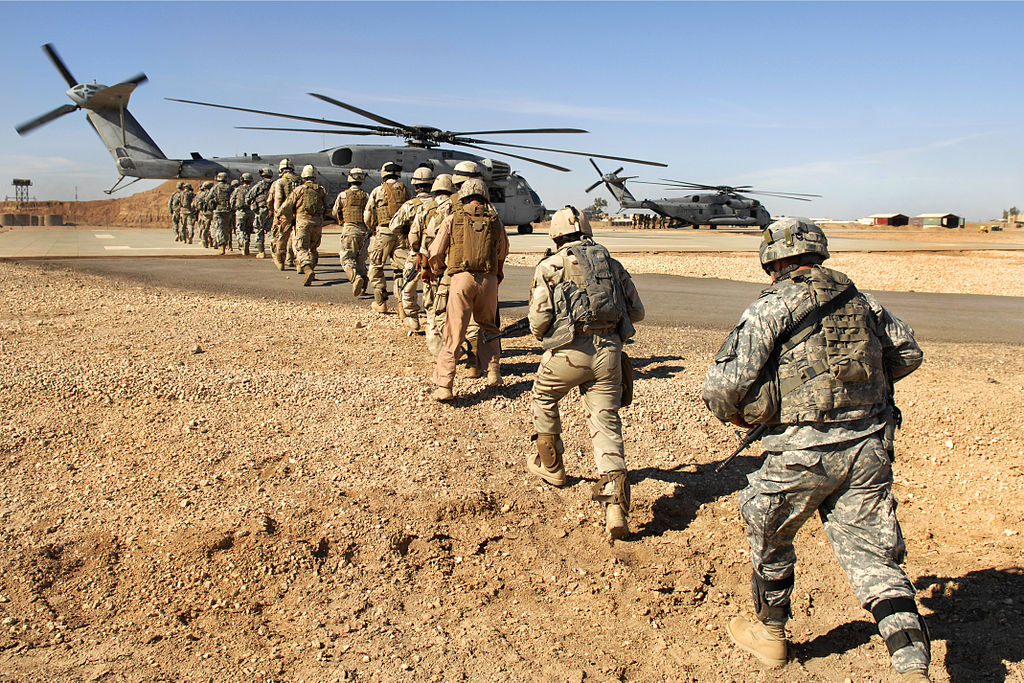
Of the hundreds of thousands risking their lives to reach Europe this year, the vast majority are refugees from Syria, Iraq and Afghanistan – two of which NATO has already  invaded and occupied. Furthermore, it’s no coincidence this crisis unfolded following NATO’s bombing of Libya to oust Muammar Gaddafi, a long-time ally whose dissidents and refugees Britain had been detaining without trial and deporting straight back to him up for years. (Thank you Wikileaks, for telling the world.) Even so, once they decided ‘Gaddafi had to go’, to that end the US, UK and France were willing to shower with weapons the very terrorists they had sworn to oppose. Now they are in ISIS hands and pointed at innocent people. So, fighting terror with war has proven about as strategic as fighting fire with petroleum.

1024px-Flickr_-_The_U.S._Army_-_Loading_up

The War on Earth

We might also do well to note also that the same corporations that cashed in big on oil profits after the attacks on Iraq and Libya are now waging a titanic battle against climate action. Their lobbying efforts threaten to force us off the cliff into the abyss of unstoppable warming.

Leading scientists are warning that without radical change, we can expect a temperature increase of 6°C, meaning catastrophic implications for our species. Cities and islands will be swallowed by the sea, entire communities will drown in tsunamis and mega-storms, extreme drought and poisonous pollution will make great swathes of the planet uninhabitable. That will tear societies apart, trigger new wars and create millions of environmental refugees.

So when you look at the big picture, these stories are intimately linked. Climate change is on track to become the biggest driver of forced migration, dwarfing the historic 56 million people already displaced by conflict. Not to mention the fact that war and climate change are intrinsically connected, and not just in terms of the role oil interests play in foreign policy. A growing body of research highlights the significance of severe drought in sparking conflict in Syria and throughout the Middle East. Environmental factors were also been critical in the Rwandan genocide more than a decade ago, so it’s nothing new – but it is getting worse.

Globally, natural disasters have increased fivefold in the past forty years, with floods and storms claiming 1.45 million lives. Between disasters, the steady warming of the planet puts poor societies under incredible strain, spreading hunger, conflict and disease. The warming of the Indian Ocean has irreversibly altered the continent’s weather patterns and the scorching of East Africa has begun. Environmental legislation and a rapid transition from fossil fuels would be the single most effective and humane method of border control. To quote Ellie Mae O’Hagan: “mass migration is no crisis: it’s the new normal as the climate changes.” Her observation will prove prophetic as long as powerful interests are able to obscure this obvious connection.

2004-tsunami

War on the Poor

And then there’s austerity. This too is an ironic tragedy fit for the old Greek epics. For much of Europe, austerity is a post-crisis nightmare. But of the global South, it has long been the law laid down by a united West. The theft of public wealth and welfare being carried out by the Troika in Greece elsewhere in Europe, for all its horrors, is really just a more cautious version of World Bank and International Monetary Fund policies tested in developing countries the world over. For forty years they have made vital aid and loans conditional on the neoliberalisation of Southern economies and the deliberate strangling of public healthcare, education and industry. And in the event of uprisings like the Arab Spring, the governments which dominate those development institutions are at the front of the queue to sell the weapons and information technology necessary for effective repression.

Ostensibly, this is all in the name of mutually beneficial economic growth: the consistent neoliberal solution to conflict, climate change, economic crisis and just about any other chronic social issue. But this is a growth model that in promoting conflict, inequality and environmental degredation, fundamentally contradicts the kind of economic development that can improve wellbeing. What it does do, is serve another well-documented if not well-publicised agenda. As US strategic planner George Kennan said of the USA back in 1948: “We have about 50% of the world’s wealth but only 6.3 of its population. [Our] real task in the coming period is to devise a pattern of relationships which will permit us to maintain this position of disparity without positive detriment to our national security. To do so we will have to dispense with… vague — and for the Far East — unreal objectives such as human rights, the raising of the living standards, and democratization.”

Capitalism has always had its sacrifice zones: the places and people whose extinction and exploitation are deemed acceptable in the name of growth. But what the bank bailouts and Great Recession have facilitated, and what austerity reflects, is an unprecedented expansion of those zones northward, into the industrial countries once protected by a social democratic consensus. As competition for public services, housing, and jobs is artificially intensified by spending cuts, it becomes that much harder for progressive parts of society to argue for a humane response to the refugee crisis.

In a better world, this would highlight the common interests between the poor and persecuted in all nations and promote solidarity; but the great tragedy of our times is that it’s threatening to drive millions of refugees to the North at precisely the moment it is least able and willing to receive them. As Tsveta Dobreva writes: “In times of crisis, people search for an explanation for their sudden difficulties. Ultimately, immigrants, both regular and irregular, have become this crisis’ scapegoats.”

To defend itself against an enemy it sees everywhere, Europe is building walls. Concrete barricades are springing up across the south, bristling with barbed wire and armed guards. Over the coming months, I’ll be traveling across Europe to report on the refugee crisis and the broken system that created it. I’ll be relaying stories directly from refugees themselves and joining the dots between the wars, warming and austerity that drive them from their homes. And, I’ll be meeting some of the remarkable people raising their voices to say that migrant lives matter, and fighting back against the powerful interests that drive corruption, conflict and climate change all over the world.

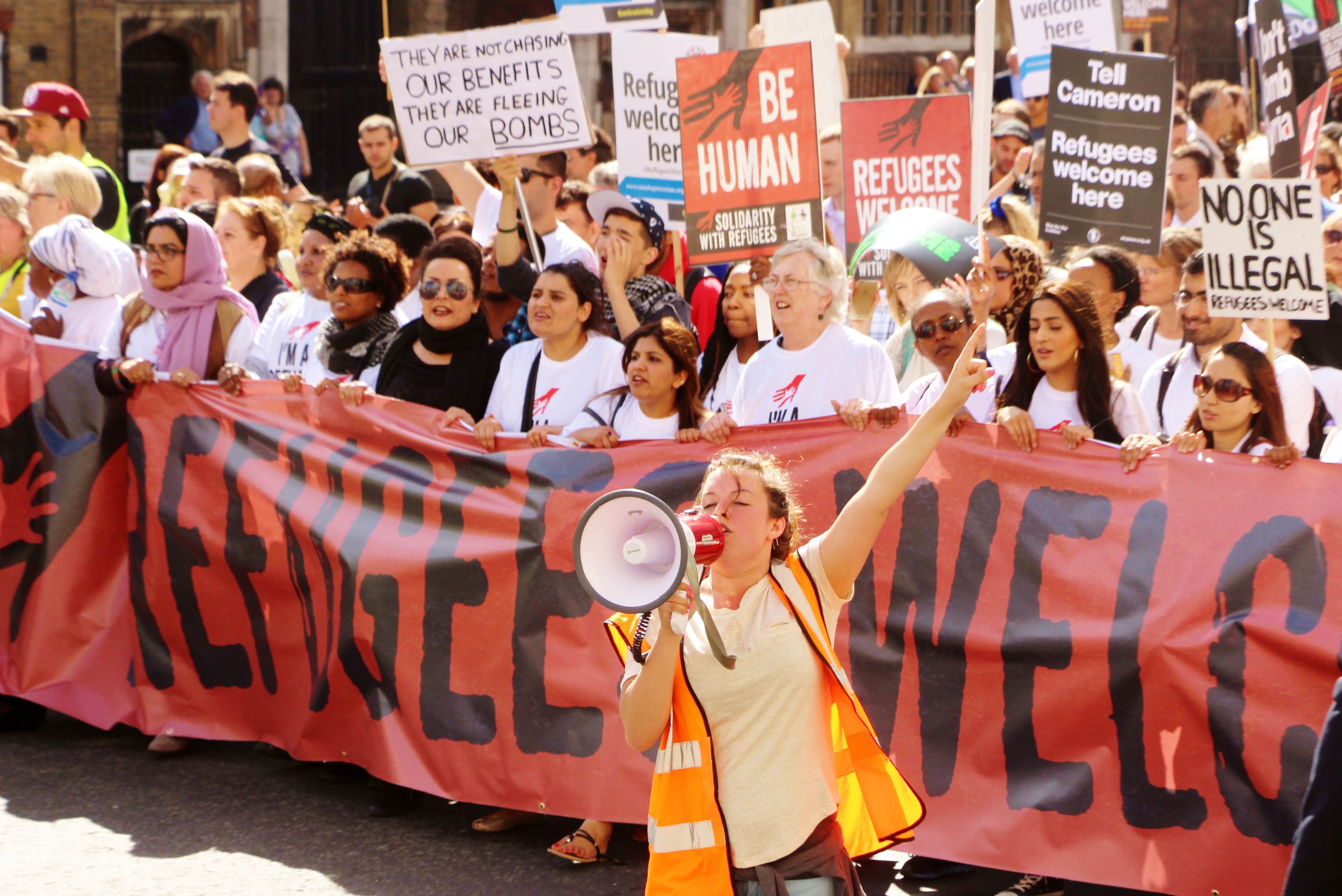
File0226

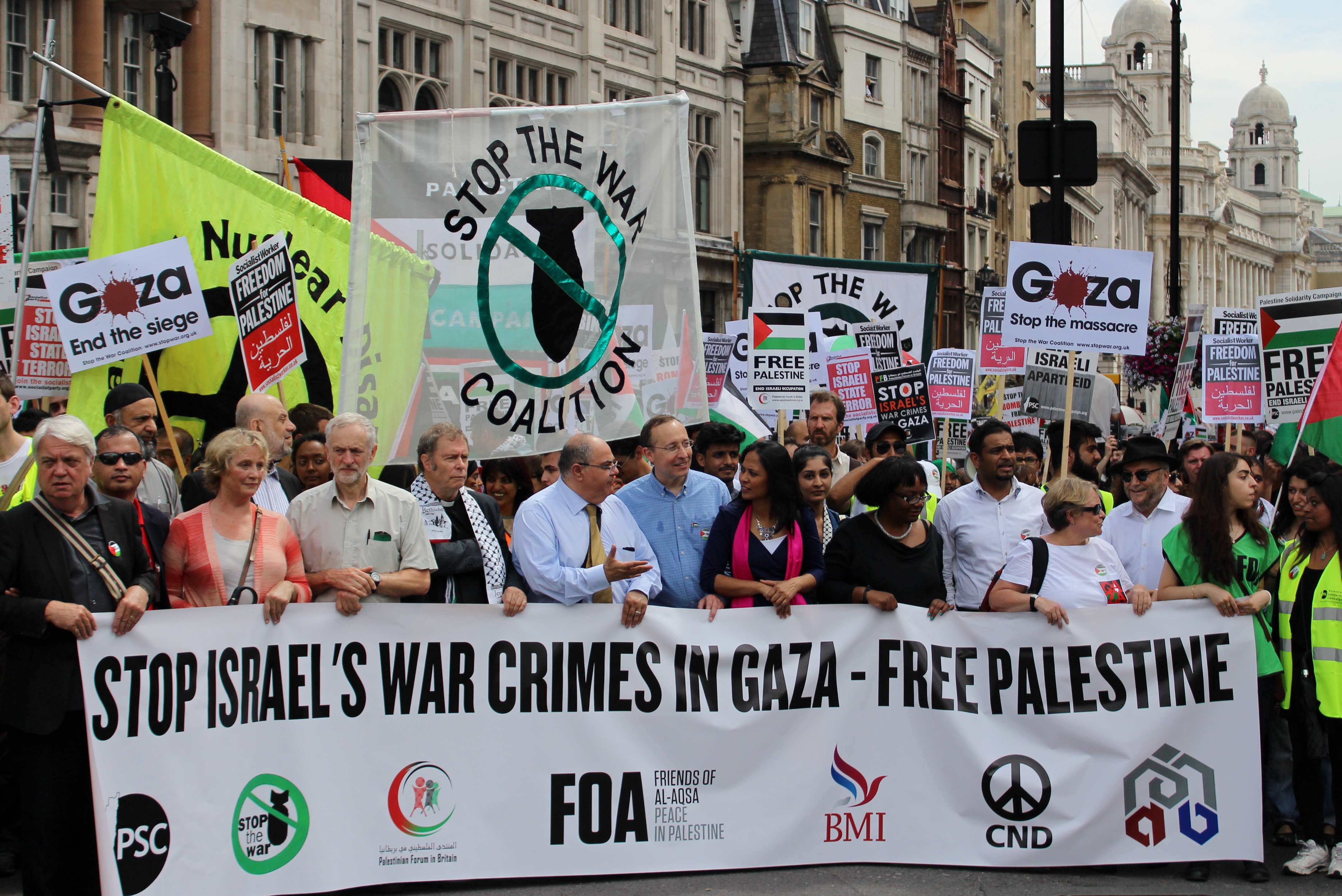
Solidarity with Refugees March in London, 2015 – Marienna Pope-Weidemann –

Originally written for The Leap

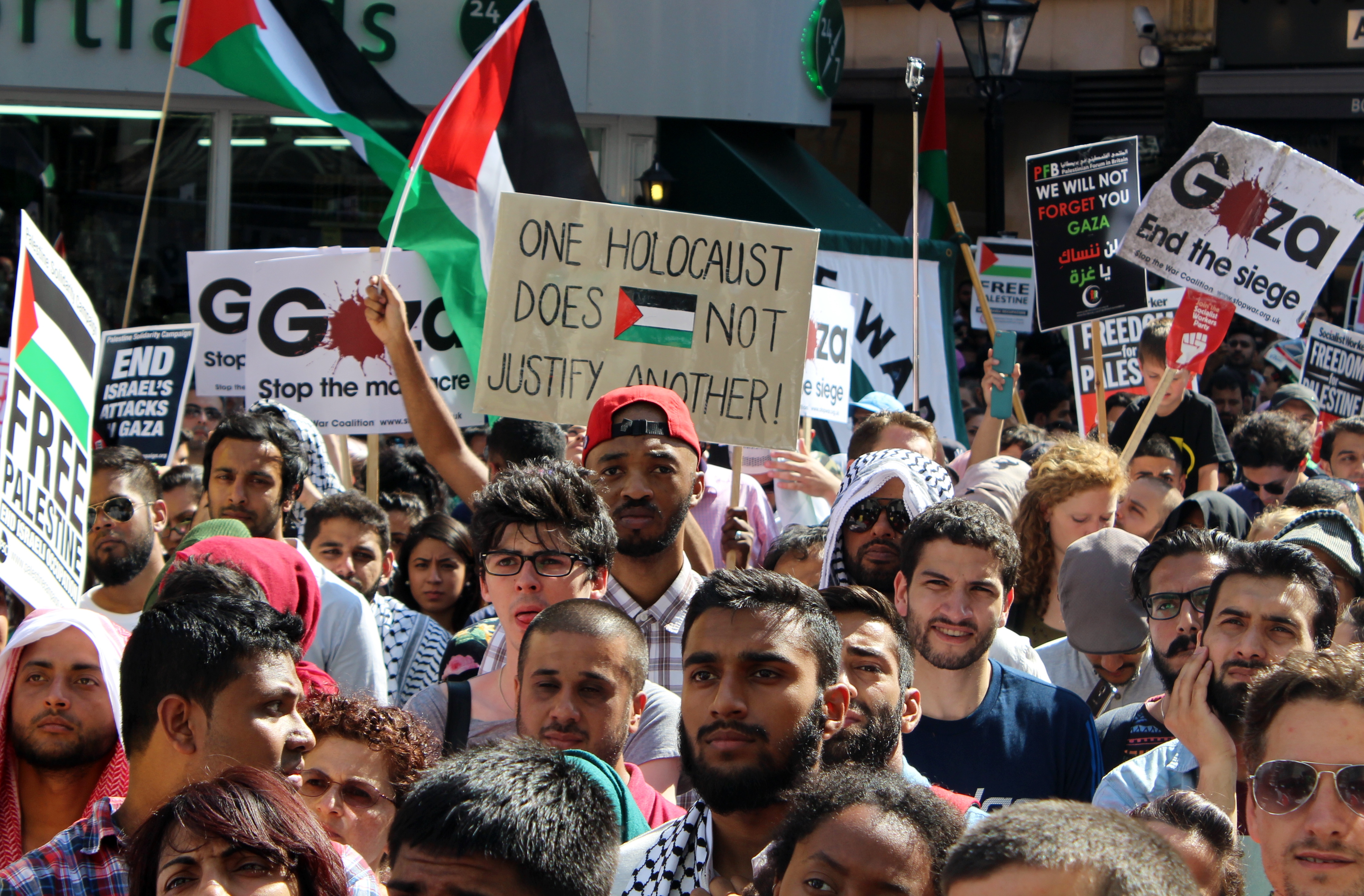
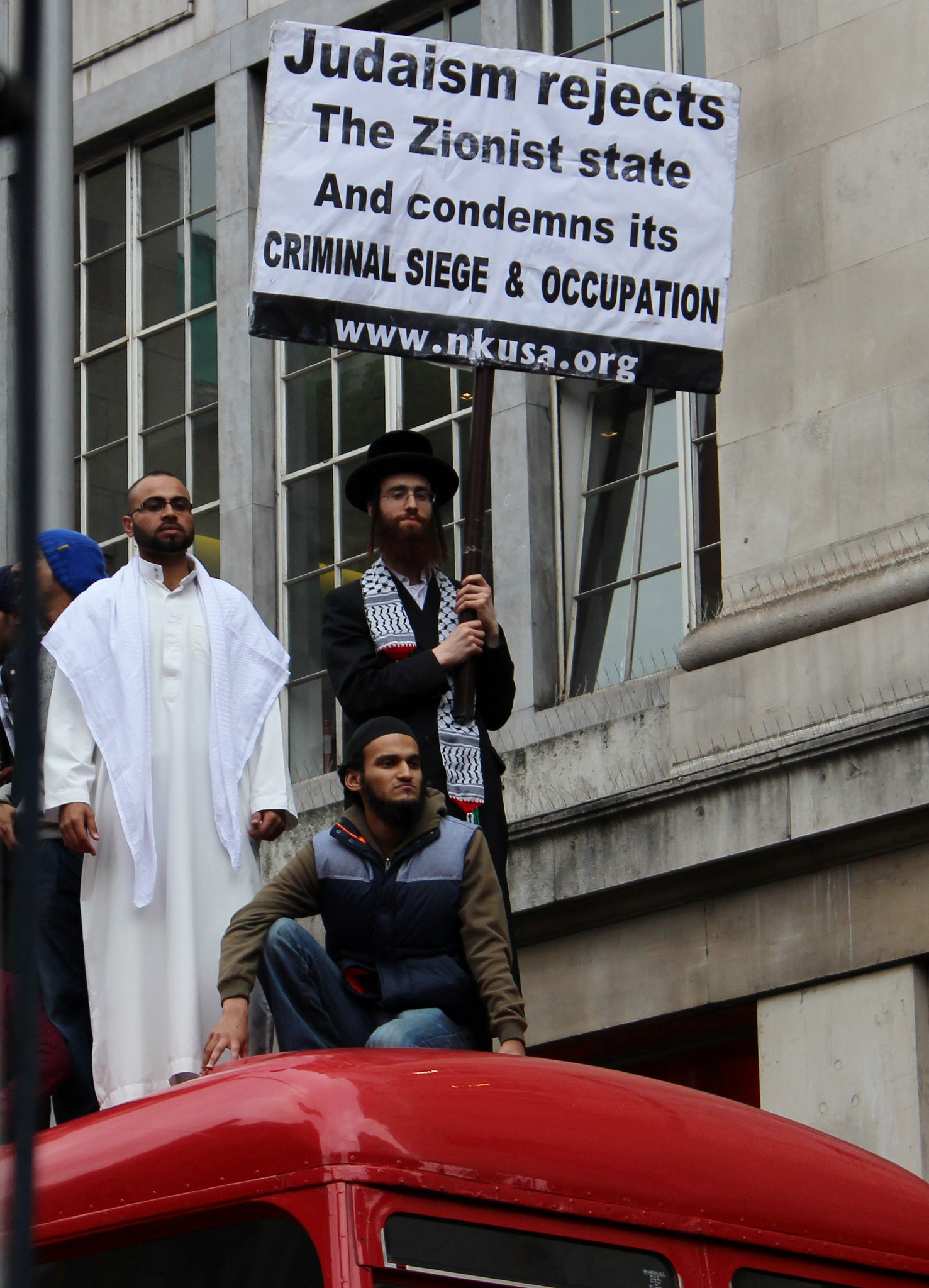
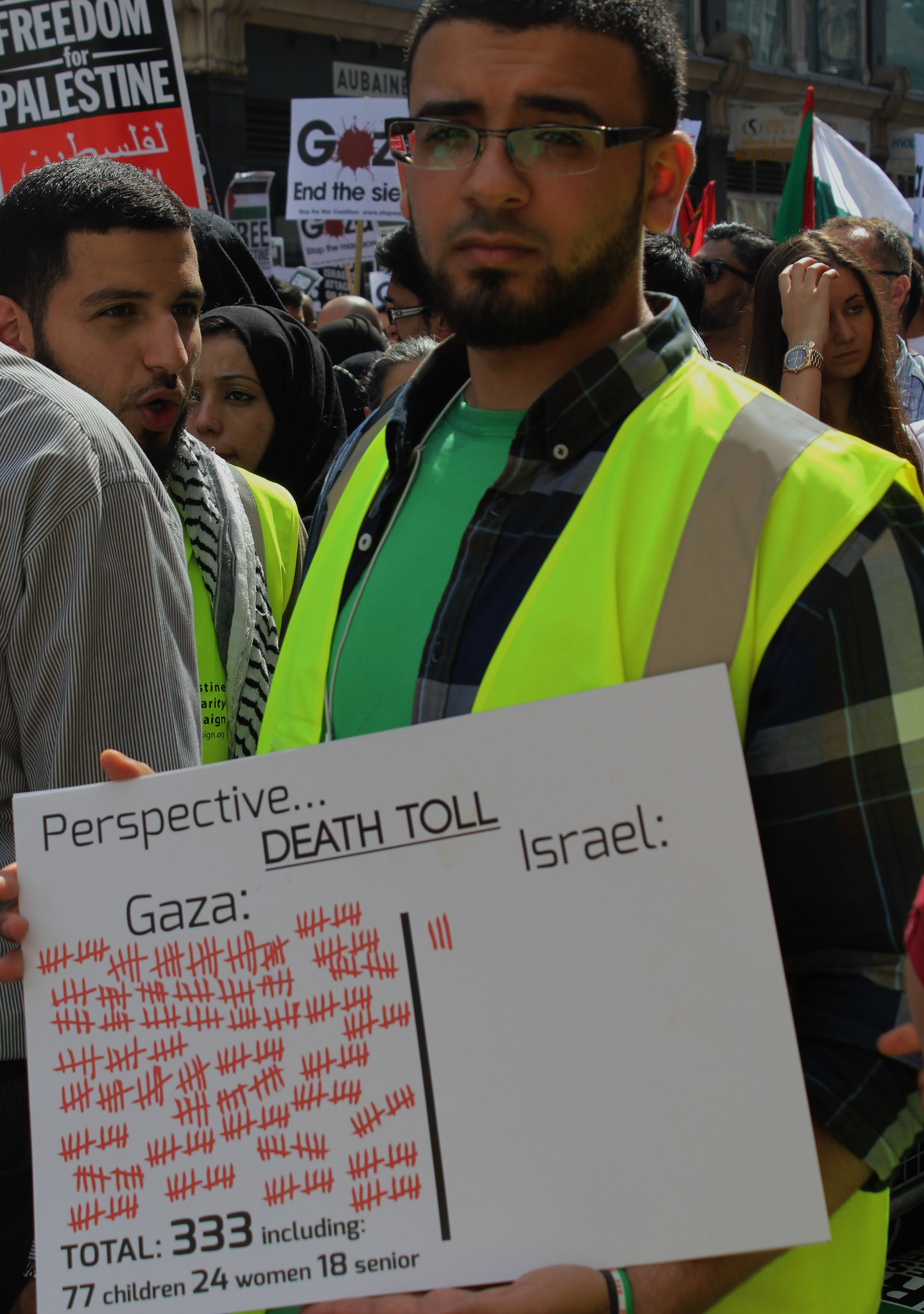
With You In Gaza

We are with you in GazaIMG_0260

Where UN resolutions are good for nothing

But stitching into tents for your refugees

Where schools and museums and family homes

Are legitimate targets

Because this is a war on history

A war on all memory

Of Palestine.

We are with you in Gaza

Where the free world spends more moneyIMG_0589

On weapons aimed at you than it spends feeding Africa

Where waterless, powerless streets

Are crammed with ghosts

And throng with the spirits of millions

Of Palestinians living now in exile

But whose hearts are with you in Gaza.

We are with you in Gaza

Where the West’s unblinking eyes

Still see no apartheid beyond the wall15472940762_7832bec7a2_k

That 430 mile concrete wall

Segregating rights-bearing citizens from the unpeople

Never mind Mandela, that canonised freedom fighter

Who said the war on apartheid was still on

Until freedom for Palestine too was won.

We are with you in Gaza

Where your family grew as old as the olive grove

Until the tanks came, and the branchesIMG_0882

Were crushed as quick as human bone

As the UN, which once owned

And gave away half of Palestine

Now inquires and condemns

And draws green lines.

We are with you in Gaza

Where your babies are born at checkpoints

And called terrorists before their mothers name them

Where they inherit their grandparents’ nightmaresIMG_1669

And the monsters they draw are real

And have no trouble sleeping

Safe in the knowledge that they fight for democracy

(A democracy which ignores elections, draws borders round its majority

And beats its own citizens for protesting Zionist brutality).

We are with you in Gaza

Where you see this man here,

He talked liberation for sixty years15450211216_79e80d1f35_k

Put flesh between hope and bullets for sixty years

Held his dignity like a shield but died in poverty

Without justice or autonomy

Leaving children who dream only

Of a brother returned from the cells

The silent, unaccountable cells that

Read no rights and appoint no lawyers

And need no jury to sanction suffering.

We are with you in Gaza15286578890_f9dbee080a_k

Where Western weapons roar

While Western leaders her no evil

Speak no evil – speak only of a peace process

Which mocks the term

What peace without justice?

What process between Gaza and Goliath?

Double speak, double speak,15286677487_5c6a19a26a_k

Is ‘peace process’ just UN speak for ‘well-mannered genocide’?

We are with you in Gaza

Unlike the liberal media

Where a hundred years of oppression

Is redacted and sound bitten

We are shamed by our anger

And angered by our shame – explain?

Ashamed to rage at Goliath when his banker lives in Westminster

Anger at the atrocities bankrolled in our name.IMG_0895

We are with you in Gaza

Where a monsoon of shells flood

The alleys of Al Shujaya with civilian blood

Where the children are coming home legless

Or headless, were helpless

As you feel now, curled up like a child

As the grief pours in,

As we feel now, beyond the sea,

Standing with our candles15286642488_710784d69b_k

As we cry

We will not let Gaza die!

(Not that Gaza is waiting on us to fight

For her survival)

But we are with you in Gaza

We have been every day

Since 1948

Gaza, we are marching

Gaza, we are chanting

Gaza, we are divesting

They said the old would die and the young would forget

But we still read the names of your dead15286361499_e97d09c78b_k

Nidal aged five

Mohammed, fifteen

Riad, fifty

Hussein, thirteen

Salah, six

Ali, only yesterday, only eighteen months.

And what of the killers, of the IDF?

They traumatise and maim and kill15473213335_659acc18d8_k

But they regret

Almost with the vigour they forget

Civilian death

Oh, but the moment every Palestinian’s gone

Or bends the knee

Then, they say, there can be peace!

How simple

How civilised things might be…

***

All photography my own

#JezWeCan : A Personal Account of the Death & Potential Resurrection of the Labour Party

“I am not interested in power for power’s sake, but I’m interested in power that is moral, that is right and that is good.” – Dr. Martin Luther King Jr.

When I was five years old I watched my grandmother, with narrow eyes and a heavy sigh, tear Labour’s 1995 manifesto into pieces. She left them on the kitchen table and went straight to call head office and cancel her party membership, breaking generations of family tradition. At the venerable age of five all I knew about politics was that we had two choices – Labour and Tory – and Labour were ‘the good guys.’ So I asked her why she’d left.

She told me that Tony Blair had scrapped something called Clause 4: a promise to put the public in charge of the services they needed and the places where they worked. “It’s about the right of ordinary people to control their own destinies,” she explained. It was a bit poetic, perhaps an echo from a more optimistic generation, but she was absolutely right. That’s what it’s always been about and precisely what’s at stake now.

15383196425_954591f9ea_o

I didn’t think much about Clause 4 growing up. But I did think a lot about was the war in Iraq. I was 12 when it started. We watched the historic anti-war march in London – the biggest march in British history – and then watched the government go to war regardless. That was when I learned that democracy in Britain was not working the way it was supposed to. It was our first truly televised war, and I was transfixed by the coverage: dispassionate reporters parroting official sources while women wept over their kids in ruined buildings, endless parades of tanks, Iraqis fighting and dying in the streets while our artillery boomed like the voice of an angry god. I watched as the party that said it couldn’t afford to educate me managed to finance all those long years of occupation, during which time the truth about the WMDs, the civilian casualties, the military incompetence, the oil interests all spilled out into the light of day.

In their desperation for an ‘electable’ leader too many have been willing to sweep these crimes, which once horrified and enraged us, under the carpet. Some are even tapping an argument or two from the man himself, whose considered position is “even if you hate me don’t vote for Jeremy Corbyn.” I put it to anyone willing to swallow that line that they have forgotten the fundamentals of what the Labour Party is for and how it became a political force to begin with.

labourThe People’s Party? 

Things had been going wrong for a while by the time Blair came into power, of course. In 1976 the flows and fluctuations of our free market system cast Britain adrift in an economic crisis and forced Wilson’s Labour government into a £4 billion loan from the International Monetary Fund (IMF). Of course there’s no such thing as a free lunch with the IMF – in exchange they forced Labour into deep spending cuts and wage controls. By 1979 the unions were going on strike just to be heard by their own party. Conceding to the IMF’s terms had put Labour on the opposite side of the fight from its core supporters.

That dividing line has been in place ever since. Opposition to the Conservatives through the Thatcher years was a unifying force, but the 1990s dawned on a new era of personalistic, poll-based electioneering. To maintain profits in the post-war economy, corporate interests had painstakingly cultivated a new culture of individualism. Brands developed personalities and so did their products. Buying those shoes or that car became an expression of who we were, or aspired to be. You no longer had to be American to buy into the American Dream.

Psychoanalysts and focus groups were becoming an intrinsic part of doing business, and the rise of Thatcherism brought this ethos into the political establishment as well. Inspired by Bill Clinton’s presidential campaign strategy, which was guided by focus groups of swing voters, the Blairites wanted to ‘modernise’ the Labour Party. Their argument wasn’t about policy or even politics. It was a marketing strategy. After eighteen years of Tory rule they were determined to win power. It was no good banging on about exploitation, social justice and the working class, they insisted. No one was listening anymore. No one wanted to self-identify as working class, since the rise of cultural consumerism and political individualism made it a source not only of struggle, but of shame. We could all be aspirational consumers now – and if you weren’t one, you had only yourself to blame. No one could sell a socialist manifesto in a climate like that.

Of course, politicians aren’t supposed to work like that. They’re not car salesmen. They’re supposed to have real values and convictions; to put the public interest first; to respect us enough to win votes through actual debate, votes that are supposed to be more than a commodity you bid for; they represent a mandate of trust from the people. But New Labour had just won a leadership election, led by a bright eyed young Blair promising to bring down taxes, benefit scroungers and young offenders. It was a manifesto pulled straight from the focus groups of suburban swing voters. Clause 4 didn’t stand a chance.

Diagnosis of a Dying Party

Over the past twenty years we’ve seen where this ‘New Way’ leads. Today the party’s active base is a fraction of its former self, its relationship with the unions in tatters and its relationship with my generation non-existent. There is no question about it. Whatever was achieved by his government can never mitigate the damage done to our public services, not to mention to our international standing after an illegal invasion that destabilised the Middle East and a fifteen-year long War on Terror that has divided our communities and eroded our civil rights. Under Blair, the Labour Party lost its vision: the vision that gave us the post-war welfare state and gave the party its sense of self.

Nothing showed this up so well as the general election. Miliband, most agree, was a thoroughly uninspiring leader and he ran on a thoroughly uninspiring platform of ‘austerity-lite’. The right is quick to claim it was the ‘lite’ and not the austerity part that cost him victory. But as has been repeatedly pointed out and ignored, his tokenistic leans to the left, like trading the bedroom tax for a mansion tax and freezing energy prices, were usually the only thing boosting popularity at all. Labour used to win elections on slogans like this: ‘The rich man’s power is in his purse, the poor man’s power is in his politics. Don’t surrender your power to the rich man, he already has too much. Vote Labour.’ But as others have argued, by adopting the Conservative line on austerity (‘cupboard is bare, credit card maxed out, fiscal responsibility for the poor’,) Labour was just kicking the ball towards its own goal.

15383153675_d51dc2fbec_oThe Labour Party has been chasing power by any means necessary. It was the wrong choice in 1994, and it’s the wrong choice now. As a strategy it reflects an existential crisis for a party whose leaders have forgotten it wasn’t built to seek power for its own sake; that being in government was only as good as it empowered them to empower labour (that’s us – the public.) So we lost faith. Call it social democracy, loony leftism, call it a cat with a hat on, it’s about social justice. We’re about social justice. And when it became clear that the Labour Party was no longer fit for that purpose, we left.

Lifelong advocates like my grandmother left. People like me never joined. Ken Loach helped set up Left Unity. Mark Steel spent his time with the People’s Assembly, since it was representing labour values better than the party. (Both of them have been banned from voting in the leadership election.) The whole of Scotland broke a century of tradition and jumped ship to the Scottish National Party. We flooded into the Green Party, into new radical organisations and humanitarian NGOs, founding and joining whatever might help fill the hole left by the quiet moral death of the party. Disenfranchised and disillusioned, many just stopped doing anything at all, and in a self-fulfilling prophecy became what the Blairites always wanted: 15286607298_4a9b8c9d6a_opassive consumers.

What all of us (particularly Labour’s leadership candidates) need to understand is this: even if you want to, you can’t realise labour values with nothing more than passive consumer votes and a Labour Government in Power. Why? Because a Labour Government actually acting on Labour Values will necessarily go head to head with powerful vested interests: the energy companies, the landlords, the corporate media, the banks. And to stand up and win that government needs more than passive consumers at its back. It needs a politically engaged, self-educated and empowered electorate; strong trade unions and a mass movement ready not just to go out and vote, but to organise, demonstrate, even strike for our rights. It needs the things Corbyn’s been building outside Westminster all this time; that only he has the credibility to bring back to the party.

Open the Flood Gates

Blair’s way was never going to win us a better world. Today it can’t even win a general election. In 2015 Labour tried to play Blair’s game again but this time they lost, because Britain is not the same country it was twenty years ago. Twenty years ago the middle class was learning to aspire, wrapping itself in the mythology of the Self Made Man and preparing finally to put its eternal faith in the free market system. Today we are living in the smoking wreckage of that system. We had to bail out the bankers who lied for profit, and got paid our money by MPs who lied about their expenses. We’re drowning in debt and lining up at food banks. We’ve seen the BBC harbour paedophiles and the police harass black kids in our cities. Things are so bad, the top half of the country wants to leave. This does not inspire confidence. Public trust in these key institutions has never been so low, and with our faith so clearly misplaced we are becoming interested, again, in what my grandmother said *it* was all about: people controlling our own destinies.

The labour movement built the Labour Party to make that possible for everyone at a time it was the privilege of wealthy white man. My whole life I was convinced that the best of the Labour Party was confined to history books and sepia photographs. But last week I joined over 100,000 others and signed up as a supporter. This huge influx has the party leadership quaking in their suits. The Blairite group Progress, described by one of its own members as “an unaccountable faction dominated by a secretive billionaire” which has in turn dominated the party for years, now stands in the shadow of a tsunami. From this vantage point it’s clear that the leadership race is about much more than the next leader. Clearly they will stop at nothing to wreck the vote. One thing Yvette Cooper has right: it’s a battle for the soul of the Labour Party. And it’s a chance for us to correct that historic mistake I witnessed at my grandma’s kitchen table, when the party chose power over principle.

That makes him our best defence against the rise of the already bloated far-right, because he represents a break with the establishment driven by politics of hope, not hate. His straight talking sincerity, sorely lacking elsewhere, is raising the confidence of a betrayed nation. Despite his staunch anti-racism it’s even proving as popular with UKIP voters as with the Left. It would be a mistake to underestimate the array of forces he could unite behind him.

Whatever their differences, a vote for anyone else is a vote for austerity. The anti-austerity Syriza party in Greece and the SNP in Scotland swept the board because they promised real change; the same reason there’s a black man in the White House. The right said it would never happen. His supporters said ‘yes, we can,’ and they did. And if Labour could find the courage to be what it once was – anti-war, anti-austerity mass party – it could take the country by storm.

They said Syriza and the SNP weren’t credible. They said a black man in the White House wasn’t credible. But people can overcome a lot when they believe real change is imminent. If Labour could find the courage to be what it once was – anti-war, anti-austerity mass party – it could take the country by storm.

2015-08-26 15.58.23But here’s the point: even if he lost, at least we’d have the chance to build something we believed in again. So if you’re lucky enough to have a vote – and if the party let you cast it – ignore Tony Blair and vote Corbyn for all the reasons he says you shouldn’t. Do that, and rather than accepting it, we could fight back against whatever’s gone so wrong in our country, that one of Parliament’s only consistent voices for peace, democracy and social justice gets less of a hearing than the one former leader who should definitely be in prison. That’s the fight that really matters. There Is An Alternative. All this vote determines is whether the British Labour Party can be part of it again.

Originally published by The Critique

Voice

The movement moves    11332102773_095868ce73_o (2)

Quickly

There’s a patchwork of placards

And a river of marchers

Flowing by the Thames

And the endless succession

Of classrooms and basements and bars

Where we devised the making of a new world.

‘Stronger together, shoulder to shoulder’20121015_132333

Impeccable logic

But sooner or later

You also have to stand alone

And suddenly, everything’s slow.

Heart thunders in my ears,

Utterly legless but pulled up by my

Grandmother’s hands and jostled

By the ghosts of my class to SPEAK!

To say something, point somewhere,

Anywhere but backwards

In the face of all this savagery,

The manifestation of all they warned

Capital would be

And already seeping into the bones

Of the Next Generation.

Hate to say it because, you know,11332022973_eb31ab6ea7_o (2)

“Pessimism of the intellect optimism of the will”

But it probably isn’t never too late

For the Beast to be killed

So we sort of need to move on this…

And it’s not like I had nothing to say

(How can anyone who’s seen any of this

Have nothing to say?)

So I stood

And my Nanna’s invisible shoulderIMG_0489

Kept me upright:

“We’ve had enough of the bombing

And the lying and the thieving

And of living in a world where

Nothing is held sacred

Nothing is free

From the mechanised grip

Of the Company

Of the politics of hate

And the economy of madness20121020_134224

That consumes all matter

And tosses it like so many

Dead bodies on the

Altar of Infinite Growth.

The Priests of Progress

Gather around their acronyms

And their projections

(Which never go down)

And perform voodoo

Against the body politic

Feeding the market on human flesh

Chanting constantly

About the End of History.IMG_9691

We’ve had enough of that too

What an insult!

This, the end of the line?

This violent, garish,

Poisonous mess,

This all-encompassing apartheid

Of all people from all people

And the planet

And from knowledge?

This carnival of spiteful caricatures

That calls itself a ‘discourse’

Little more than a

Chorus of slogans masquerading as

Free expression?

IMG_9758

Enough of that too.

Don’t talk to us about freedom

From the Penthouse Suite on the 43rd floor

You, who climbed up there

On the backs of blacks,

And the dreams of great women,

And the fingers of the factory kids,

And kicked away the ladder,

Now you’re going to talk about

‘Natural inequality’?

Ten thousand years of darkness dispelled20121020_163908

By… ‘equal opportunity’?

And opportunity to what?

Climb over each other to kiss the ring?

Trade ipods for the right to sing?

Drop democracy for the right to vote?

Settle for this

And surrender hope?

The prince of Wall Street20121021_153905

His Priests of Progress assure us

History is ended and we have no choice

But not

While we still have a voice.

***

All photography my own.

Solidarity تضامن

Solidarity

Is not something you discuss over dinner

It is not a hypothetical position to be

Defended on theoretical chessboards

It is not an artful argument

It does more than merely ‘strike a chord’

Solidarity

Is not the sum of its facebook likes

It is not painting your face for the day

We Were All Palestinians

Then pressing play on real life

And pause on the siege

Till the next time Gaza bleeds

Solidarity

Lives in blood and bone

It’s the calling of another land your home

Just because it’s here on planet earth

The calling of another’s brother kin

Just because he’s here on planet earth

And we have some power and freedom here

For what it’s worth

And if there be such a thing

This killing is a sin

And so is silence

Solidarity

Is a reflex that can’t be curbed by convenience

Feet that march till the tanks stop

Voices chanting till the lies stop

Eyes still open till the killings stop

A full, heavy silence for the naming of the dead

Then no justice, no peace –

Hands off the Middle East!PR9A2036

For Ali Saad Dawabsheh

تضامن
All photography my own

The Good Ones Go First

No good deed goes unpunished

In this topsy turvy place

The wrong people in power, in prison,

In the breadline, losing face.

I put two parents in the ground by 24

Their ghosts march with me, young no more,

For I have learned, we’re not cursed

We just live in a world where the good ones go first.


The NHS, it did its best

But bound and gagged and laid to rest

It just aint what it used to be

So the cuts cut up our families.

Yet you ask why we smash a few windows?

Why we bang on the Parliament doors?

“We’re dying out here, sirs,

And the good ones are going down first

So please sir, can we have some more

Of what’s rightfully ours?”


I loved a boy that stood for justice

And was taken down for nothing,

They take your freedom if you use it

And call power out on suffering.

Cops can bash kids’ heads in and go home to their wives

While our boys stare through bars, left behind by their lives

Watching futures fall down cos they took a slip back

Took some cash to get by or took a stand while black

He’s not cursed – it’s just the good ones go first.


I loved a girl that cared too much

And means the world to me,

They say she’s sick because she strains

To accept a sick society.

But we’ve got pills for that now, don’t we?

Drug em up, lock em up and teach them how to sleep inside,

To swallow the dose of apathy prescribed

Till they forget they ever dreamed of being free,

Just so long as they sit their SATs

And put down their aspirations as they leave.

And we’ve got legions of these kids behind white walls

Cutting themselves up because life is pain, not airbrushed and glossy

And the TV made them hate themselves

And now, they can’t see their own beauty.

She’s not cursed – the good ones just go first.


I love a woman and her children

Imprisoned back at home

Who were bullied and broken

And left all alone

She gave her life to raise them right on stormy seas

But that’s not labour or sacrifice the economy sees

So when she found the courage to run and the strength to go on

She wound up at the food bank, black eyed daughter, frightened son.

Apparently, the state just doesn’t have resources for that

After the bonuses, bailouts, bombs and other crap.

It’s not them, they’re not cursed – the good ones go first.


I loved a survivor, silent for a year,

Carrying her rapist’s shame for him was the worst

But that’s what we do: “shouldn’t have said that, gone there, worn that skirt.”

And no one ever made her feel strong a day in her life

And the greatest dream she inherited was to be a rich woman’s wife

Now she’s explaining to ATOS why she’s too scared to work

“Well you’re 17 and out of school,” they smirk.

But I promise her through gritted teeth

She isn’t cursed or weak

She’s good – and the good ones go first.


I’ve loved brothers and sisters in detention camps,

Queuing for clean water and sleeping on gym floors,

And feared and hated all because

They fled from brutal wars,

Risked everything on that crossing I’ve seen take so many souls

Just to run into barbed wire, tear gas and concrete walls.

We’d sit on the lifejacket beaches and

I’d think of the good ones back home when they’d ask

If it would be ok when they reached London

Or was this the will of God or Allah?

And some days I couldn’t answer

Without breaking my own heart.


There’s no water that can ever

Wash a system like this clean

But I have seen us building something better

On the streets and in my dreams,

While they ask why we smash a few windows,

Why we bang on the Parliament doors,

“We’re dying out here, sirs,

And the good ones are going down first

But if you’d just shut up and listen

You’d hear us coming for what’s ours

The good ones will cross the threshold first

And in their footprints, new grown grass.”